Motivations & Considerations
People choose breast augmentation for many reasons — to increase size, to restore volume after pregnancy or weight loss, for gender-affirming surgery, or to correct asymmetry. All of these are valid motivations. The most important consideration is that the decision is yours, made with full information, and not driven by external pressure.
Types of Implants
Silicone gel implants: The most common type. Silicone gel implants have a natural feel and are available in a wide range of sizes and profiles. Modern cohesive gel implants hold their shape if the outer shell is compromised.
Saline implants: Filled with sterile salt water. Slightly firmer feel than silicone. If the shell fails, the saline is safely absorbed by the body and the change in appearance is immediately visible.
Implant profiles: Low, moderate, and high profile implants have different amounts of projection relative to their base diameter. Profile selection affects how the result looks relative to your existing frame.
The Surgical Process
Augmentation surgery is typically performed under general anaesthesia as a day procedure. The surgeon makes incisions — most commonly in the inframammary fold (under the breast), around the areola, or in the armpit. The implant is placed either under the breast tissue (subglandular) or under the chest muscle (submuscular). The choice affects look, feel, and recovery.
Recovery
Initial recovery takes 1–2 weeks, with most people returning to desk work within 7–10 days. Full recovery and the final settled result typically take 3–6 months as swelling resolves and implants soften into position. Heavy lifting and upper body exercise should be avoided for at least 6 weeks.
Long-Term Considerations
Implants are not lifetime devices. Most are expected to last 10–20 years before potential replacement is considered. Ongoing monitoring — including MRI screening for silicone implants — is recommended. Inform all healthcare providers, including mammography technicians, that you have implants.
Body Image After Augmentation
Adjusting to a changed body takes time for most people, even when the outcome is exactly what was hoped for. Integration of body image changes is a real process. See our body confidence guide for strategies that support this adjustment.


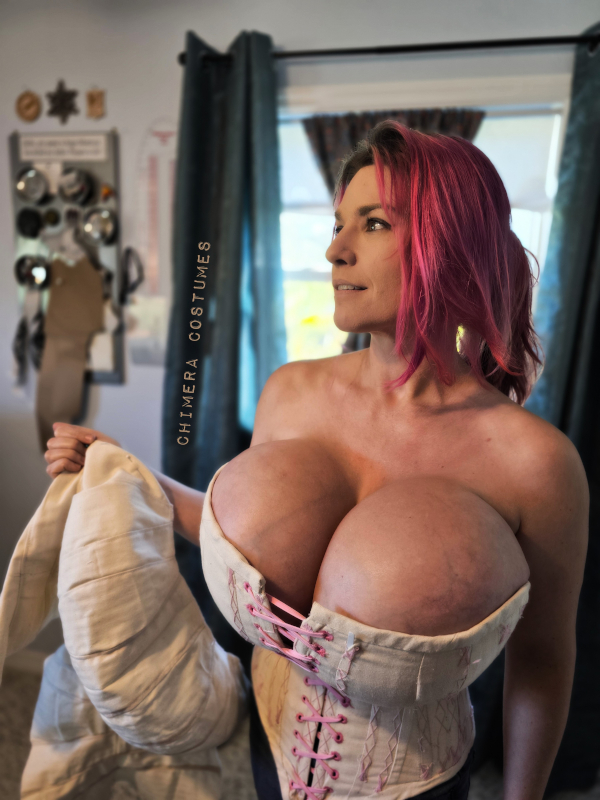

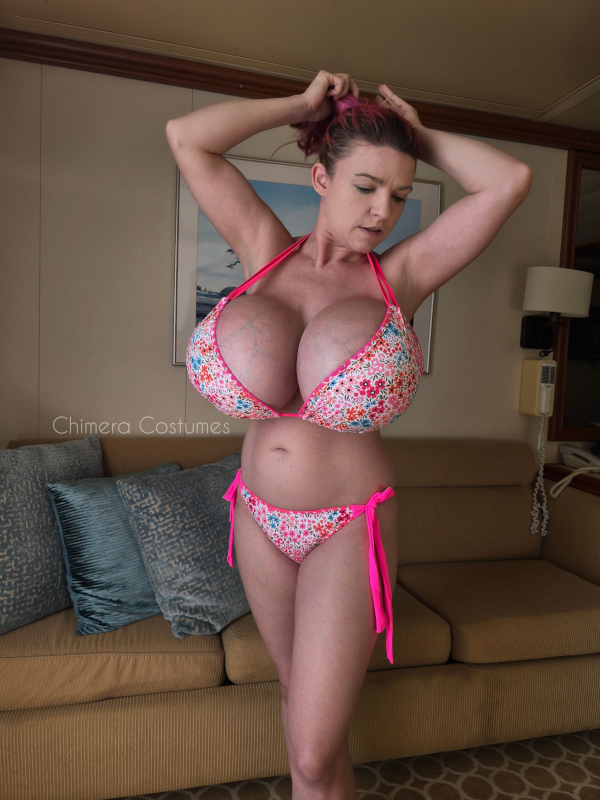
Featured Creator
Heidi of Chimera Costumes
Heidi at ChimeraCostumes.com is a master seamstress and body-confident cosplay creator who builds every costume to fit her full bust. Watch her build process free on Twitch and YouTube. Follow @ChimeraCostumes on Instagram and TikTok. Exclusive content on Patreon and OnlyFans (18+).